
One of the great things about rowing in high school is that almost NO ONE has done it before high school! That means a level playing field, so to speak, for first-time (aka novice) rowing athletes. One of the not-great-things about rowing in high school is that almost NO ONE has done it, so you don’t always know what to expect.
The information below was crafted by parent Cindy Tomlinson at the end of her daughter’s novice season (Spring 2024). We hope that this compilation of tips is helpful as you and your athlete embark upon joining us at Woodson Rowing!
At the end of the 2024 season, my first as a rower’s parent, I realized that there were a lot of things I wish I had known when the season started. So in between driving to practices and regattas, I started a list that I hope will be helpful to new families (and returning ones as well).
So here it goes, in no particular order:
1. Your rower will be hungry, sore, tired, sweaty, and wet. Not necessarily in that order, and to varying degrees of intensity, depending on the day.
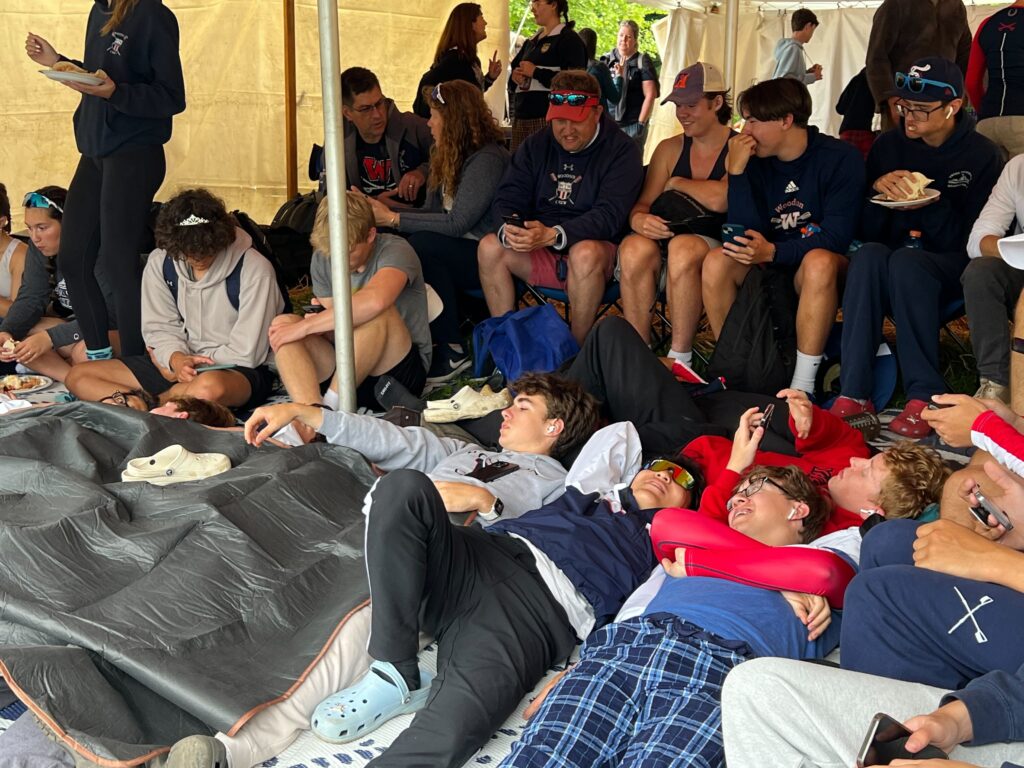
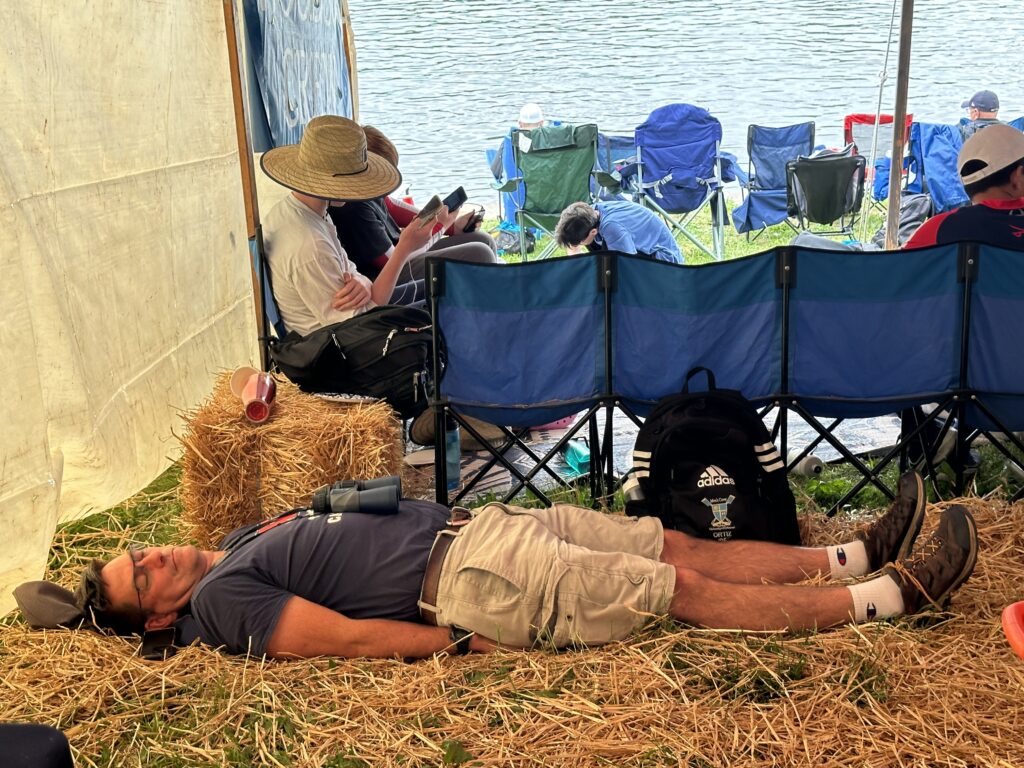
You will also be hungry, sore, tired, sweaty, and wet, depending on the day.
2. Read every email that gets sent. During the racing season, those emails are going to come fast and furious, but they contain a lot of of useful information that you don’t want to miss.
3. One of the hardest lessons I learned as a novice parent is to not make plans for Saturdays during the racing season. The race schedule isn’t posted until the night before, so for us, it is just better to not make plans at all. (This is a hard thing for me to do — I like to plan ahead — but it turns out that the best plan is to not have a plan until the schedule comes out.)
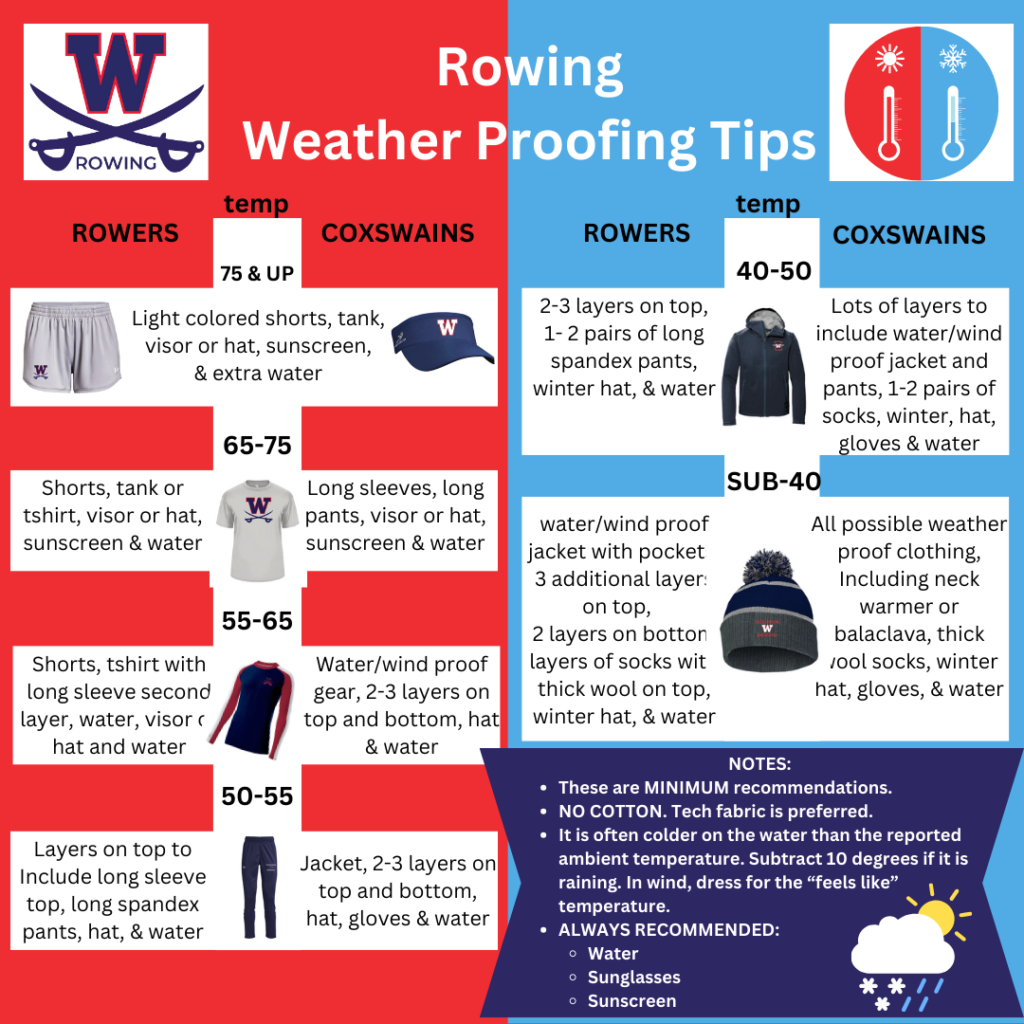
4. The weather during the season can be unpredictable. It might be cold, rainy, hot or sunny. Make sure your rower has layers upon layers to race and practice in when it’s cold and rainy. Buy all of the suggested gear — the weather jacket, the leggings, the long sleeve shirts, wool socks, hand warmers, you name it. And for when it’s warm and sunny, make sure your rower has plenty of sunscreen and water.
5. As a spectator, you also need to be prepared for all types of weather. Make sure you also have layers, hand warmers, wool socks, and hot chocolate. (Personal note, the hot chocolate served at the regattas at Sandy Run is surprisingly delicious!) But also be prepared for it to be warm and sunny. Make sure you also have plenty of water and sunscreen.
6. Follow VASRA (@VASRA_SRRP) on Twitter for live race updates and results. (Note: the cell service at Sandy Run can be pretty spotty, but this is a great way to know when your rower is on the water — you don’t want to miss them go by!)
7. The walk to the grandstand at Sandy Run is a literal hike. When it rains, it is muddy and can be slippery. Take your time and watch your step.
8. A note about getting to regattas at Sandy Run: you will have to park at an off-site parking lot, and pay for a roundtrip shuttle to Sandy Run. From there, you can either walk (see previous bullet), or take another paid shuttle down to a paved walkway that will take you to the grandstand. Note that this paved walkway does require walking up and down a hill, but it’s close and easier to navigate than the trail. My advice? Go to a race before you bring anyone who may have mobility issues so you can see for yourself and make a determination.
9. The grandstand is concrete. Bring a cushion or a “stadium chair”.
10. Once you get to the grandstand, be on the lookout for other Woodson parents! We are easily identifiable by our Woodson Rowing swag, or by us yelling “Hey Woodson!” as our boats head out to the start. It’s a great way to meet other parents and cheer for the team.
11. Speaking of meeting other parents: sign up to volunteer early. It’s a great way to meet other parents and to get your volunteer credits.
12. Opt in to the Slack channel, and get into the habit of checking multiple times a day (Slack’s notification settings are not fantastic so you’ll need to check often so you don’t miss anything).
13. Don’t be afraid to ask questions. All of us were “new to rowing” parents at some point, and we probably had the same questions you do.
14. Be prepared to do a lot of driving. Depending on interest and cost, there may be a practice bus, but I wouldn’t count on it. Make sure you join the “carpool” group on Slack. It might seem like it won’t work out, or is very last minute, but I promise, your athlete will make it to and from practice.
15. A quick note about States: if your athlete’s boat medals, the medals will be given out at the dock closest to the grandstand. As you walk to the gradnstan on the paved walk, it will be on your right just before you turn left to the grandstand. RUN, DON’T WALK, so you can cheer (and get photos)! (Alternatively, just follow the other parents who are running over!)
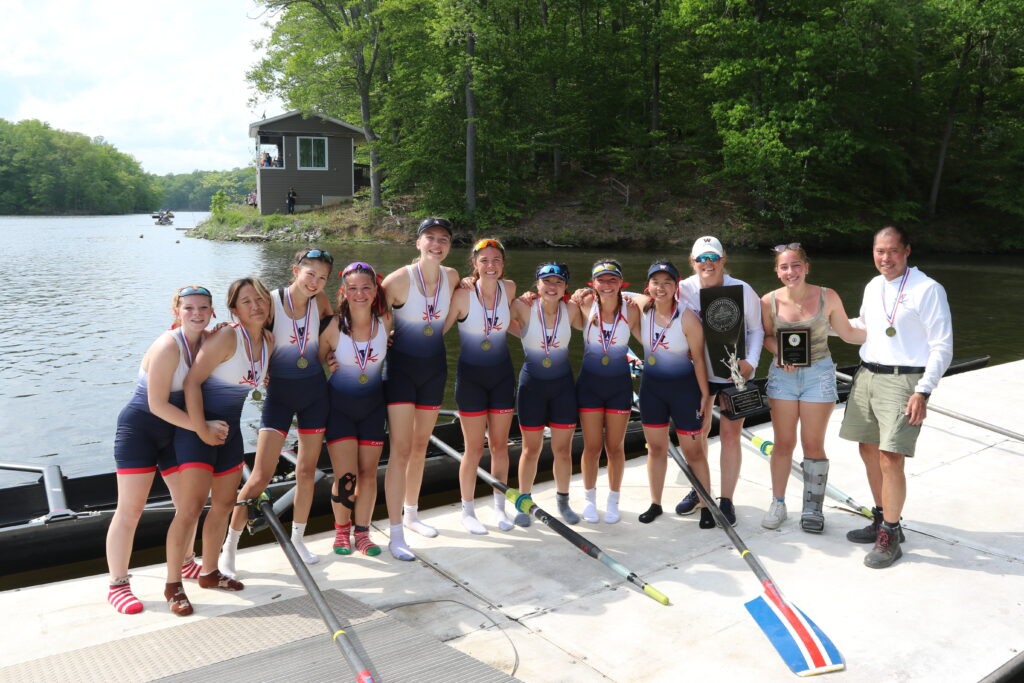

16. And one last thing, if your rower is worried about joining without knowing anyone else, please assure them that they will make friends. Quickly.
If you have any other questions (or if experienced parents have other things to add to the list), please feel free to reach out to me via Slack or at [email protected].